
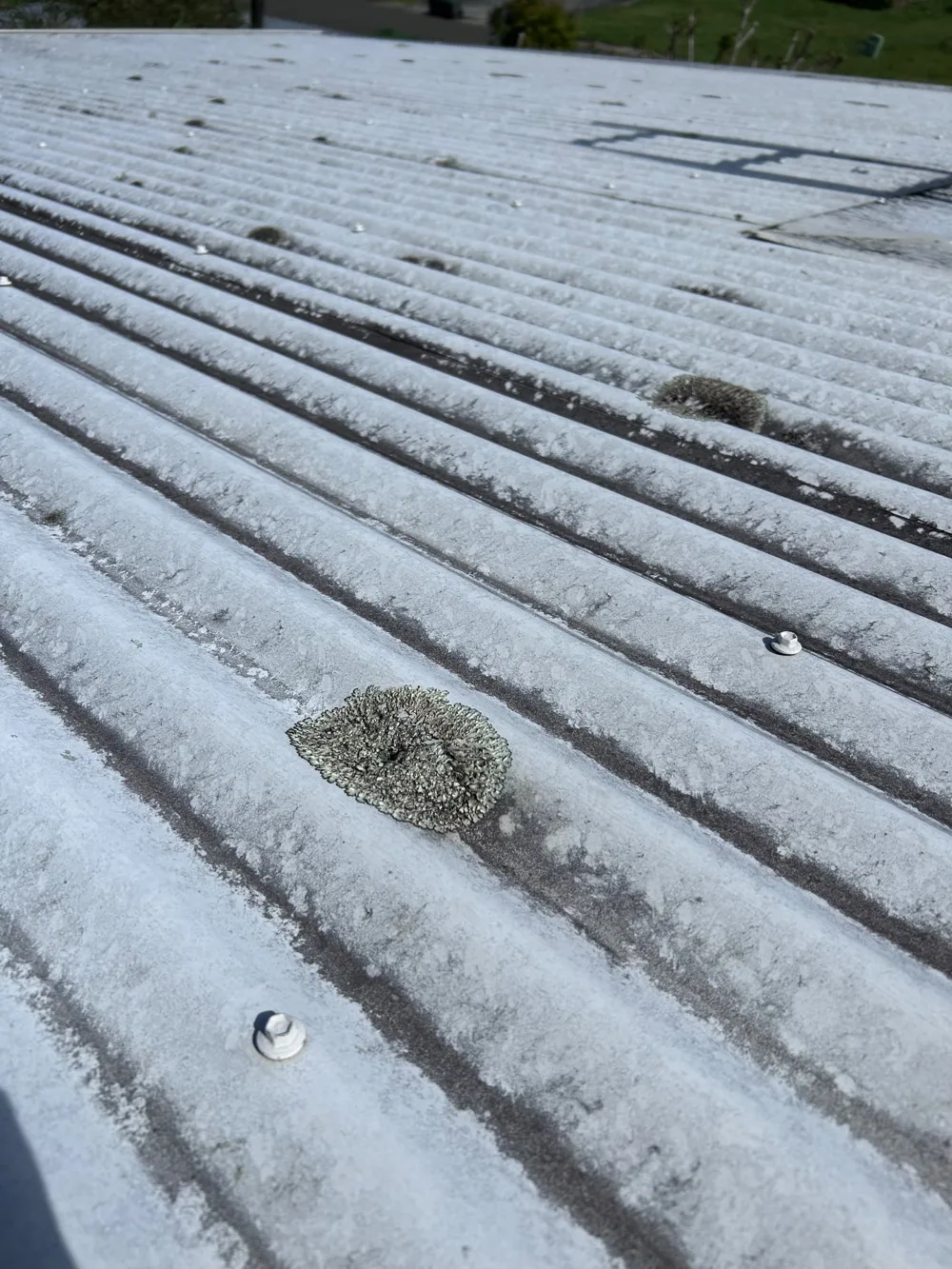
The attached roof photo shows firmly attached lichen patches and surface discolouration on corrugated roof sheets. It is the sort of growth homeowners around Berry, Kiama, Nowra and Kangaroo Valley may notice after damp weather, particularly beneath trees or on shaded roof faces. It can look like a simple cleaning job, but getting it wrong can damage the surface you are trying to protect. A photo alone cannot tell us the roof’s material, remaining coating strength or whether that discolouration is mould — those need checking on site.
How can lichen and mould damage a roof if left untreated?
Persistent growth can keep areas damp, trap debris and conceal defects. On roofs with worn coatings, cracks or exposed metal, those conditions can contribute to further weathering or corrosion. Growth does not automatically mean the roof is leaking, but leaving it unchecked can make existing problems harder to spot.
Lichen attaches firmly to the surface. On some roofing materials, long-established growth can contribute to surface weathering; on others, the main concern is dampness and dirt over an already ageing finish. Mould and algae often show up as dark staining and indicate conditions that favour repeated growth. The risk depends on the roof material, coating condition, shade and drainage — there is no single deadline after which every roof becomes damaged.
- Moisture and debris can linger around growth, particularly in shaded areas.
- Worn finishes and exposed metal need attention before corrosion progresses.
- Growth can obscure cracks, failing coatings, loose fixings and other defects.
- Material washed into gutters and valleys can add to blockages and poor drainage.
Why does lichen need to be removed carefully?
Lichen can be bonded tightly to a roof finish. Pulling, scraping or blasting it off may remove protective material with it, exposing a weaker surface underneath. Killing the growth and removing it safely are not always the same step.
A roof that looks solid from the ground may have a fragile coating, brittle tiles or existing damage beneath the growth. Wire brushes, hard scraping and unsuitable pressure can strip paint or protective tile finishes. Water directed into laps, cracks or flashings can also enter places it should not. Cleaning cannot restore a coating that has already failed, and sometimes repair is needed before any wash.
Is soft washing suitable for every roof?
No single method or chemical suits every roof. Low-pressure treatment may be appropriate, but the roof material, finish, existing damage and manufacturer’s care instructions must be checked first.
Keith uses soft washing with treatments tailored to the surface rather than one blanket chemical. The aim is to treat growth without forcing water under sheets or flashings, stripping tile finishes or leaving bare metal vulnerable to rust. Older, damaged and heavily lichen-covered roofs need particular care. If a roof cannot be cleaned safely, Keith says so before taking the job. Suspected asbestos-containing roof sheets must not be scrubbed, pressure washed or disturbed; arrange assessment by a qualified asbestos professional instead.
What about rainwater tanks, gardens and runoff?
Rainwater connections and runoff need planning before treatment. The cleaner, application method and rinse arrangements must suit the roof and protect the tank, plants and surrounding property.
Tell Keith if your roof feeds a rainwater tank, especially one supplying drinking water. Coast Flow’s approach uses tailored, eco-friendly treatments with rainwater-tank safety in mind, but that does not mean allowing cleaning runoff straight into a tank. Any isolation and reconnection arrangements need to be agreed for the product and site. Avoid mixing household chemicals or choosing a treatment just because it is labelled ‘natural’.
What should homeowners do when they notice roof growth?
Take photos from a safe position on the ground and arrange a roof assessment. Ask what material and condition the roof is in, how the growth will be treated, and whether repairs are needed before cleaning.
Do not climb onto a slippery roof or try to prise the patches away yourself. Raised growth, spreading stains, peeling finishes, rust marks, cracked tiles or overflowing gutters are reasons to get the roof checked rather than simply wash over the symptoms. Around the South Coast and Southern Highlands, shade, tree cover and damp conditions can encourage regrowth, so cleaning is part of ongoing roof care — not a promise that growth will never return.
- Check from the ground for growth, coating wear and drainage problems.
- Ask for a method suited to your roof, not just the fastest way to make it look clean.
- Make sure existing damage, solar panels, tank connections and runoff are considered.
- Ask Keith for a roof-cleaning assessment and a clear quote before work starts.
Key takeaways
- Untreated growth can contribute to deterioration, especially on already worn surfaces.
- Forceful removal can damage protective finishes and expose existing defects.
- Inspect first; match the treatment to the roof material and condition.
- Roof safety, rainwater tanks and runoff matter as much as the finished appearance.